
Where Branford’s Past Residents Appear
Different records answer different parts of an address story. Branford’s assessor can turn a current street line into a PID, MBLU, account number, and Book/Page display. The Town Clerk holds the recorded instrument. Blackstone Memorial Library holds directories, newspapers, census material, yearbooks, indexes, and house-history sources. The Historical Society adds surveys, manuscripts, photographs, and finding aids. A previous-residents search is strongest when those roles remain separate.
The Branford era table shows the useful span without inventing a continuous online run. The exact Branford RecordHub index and image cutoff was not rendered in the unauthenticated inspection. Older books and abstracts remain an office or library question.
| Source | Years or scope | Where held | What it shows |
|---|---|---|---|
| Branford Town Clerk / RecordHub land records | Exact online start not located; colonial and older books survive | Branford Town Clerk and RecordHub | Recorded parties, instruments, legal descriptions, Book/Page |
| Branford city directories | 1895 to present, uneven; street index from 1928 | Blackstone Branford Room and digitized archive | Dated names, addresses, status, changes, places of business |
| Branford newspapers | 1878 to 2008 by title; digital material through 1980 | Blackstone microfilm and Branford archive | Moves, notices, obituaries, place references |
| Branford census and local abstracts | 1790 to 1940, with 1890 missing; 1670 copy | Blackstone, FamilySearch, State Library | Dated household or place snapshot |
| Branford house-history and archive groups | 1970s cards, 1980s survey, land abstracts and older collections | Blackstone and Branford Historical Society | Property context, papers, maps, photographs, family leads |
| Branford building and permit records | Newer permitting through OpenGov from October 1, 2025 | Building, Planning, Engineering | Project, status, review, inspection dates when available |
Start with the Branford source that matches the time period. A current Branford address needs a parcel key. A 1909 question needs a Branford image or page. An older transfer may need a Branford Town Clerk volume or a library abstract.
Branford Previous-Resident Record Paths
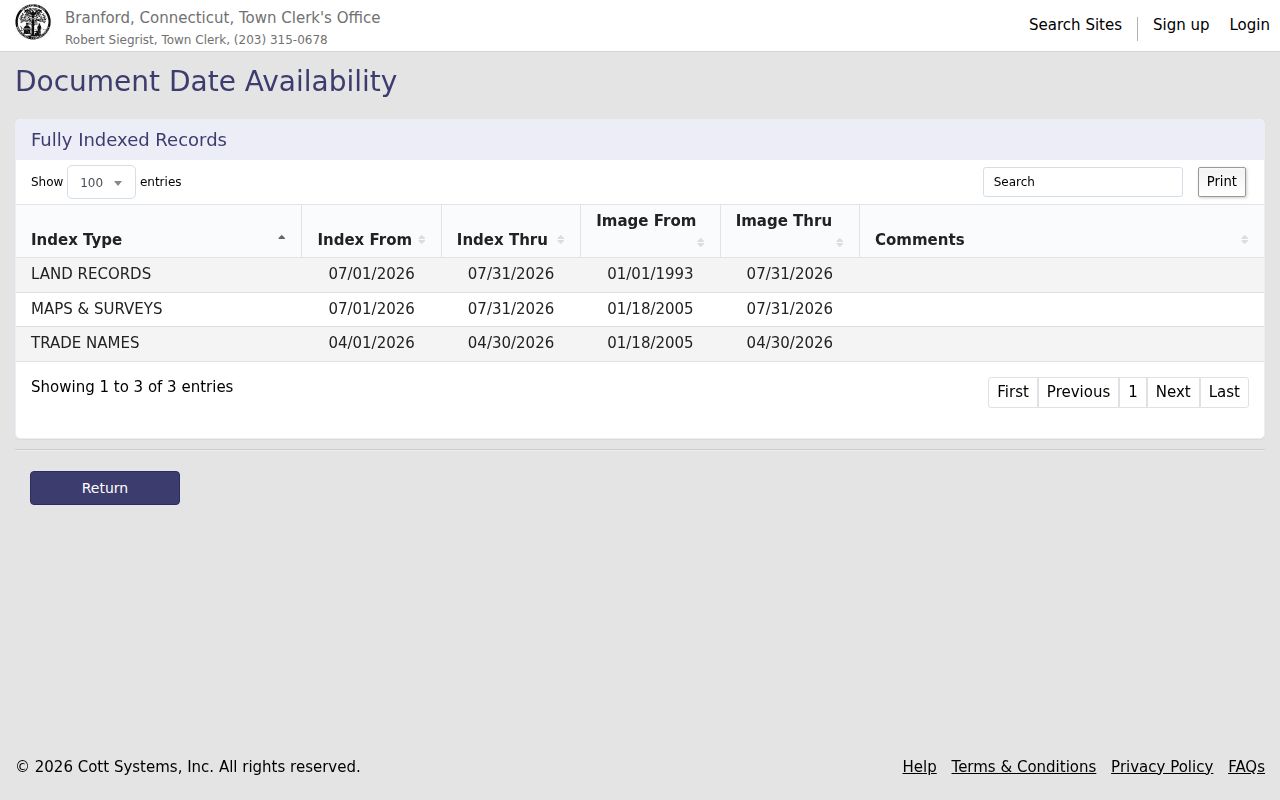
The Branford RecordHub organization page exposes a subscription land-record route and a no-subscription-fee route that describes index and image access with pay-to-print language. The current search route redirected to login during research, and the date-check view showed headings without rendered rows. That result is an access boundary, not a confirmed absence of older deeds.
Use the public Branford landing page to understand the service choice, then carry a stable key into the Branford Town Clerk office when an image, map, survey, certification, or older book is needed. A useful request names the grantor or grantee, Book/Page, instrument type, date range, or parcel. The Town Clerk page lists deeds, mortgages, liens, releases, attachments, maps, and surveys among the local record routes. It also gives in-person deed hours and copy rules that should be checked against the current office instructions.
The access choice is visible in the Branford RecordHub subscription page. It helps explain why a searcher may see a portal but still need a clerk or reference desk for the record image.
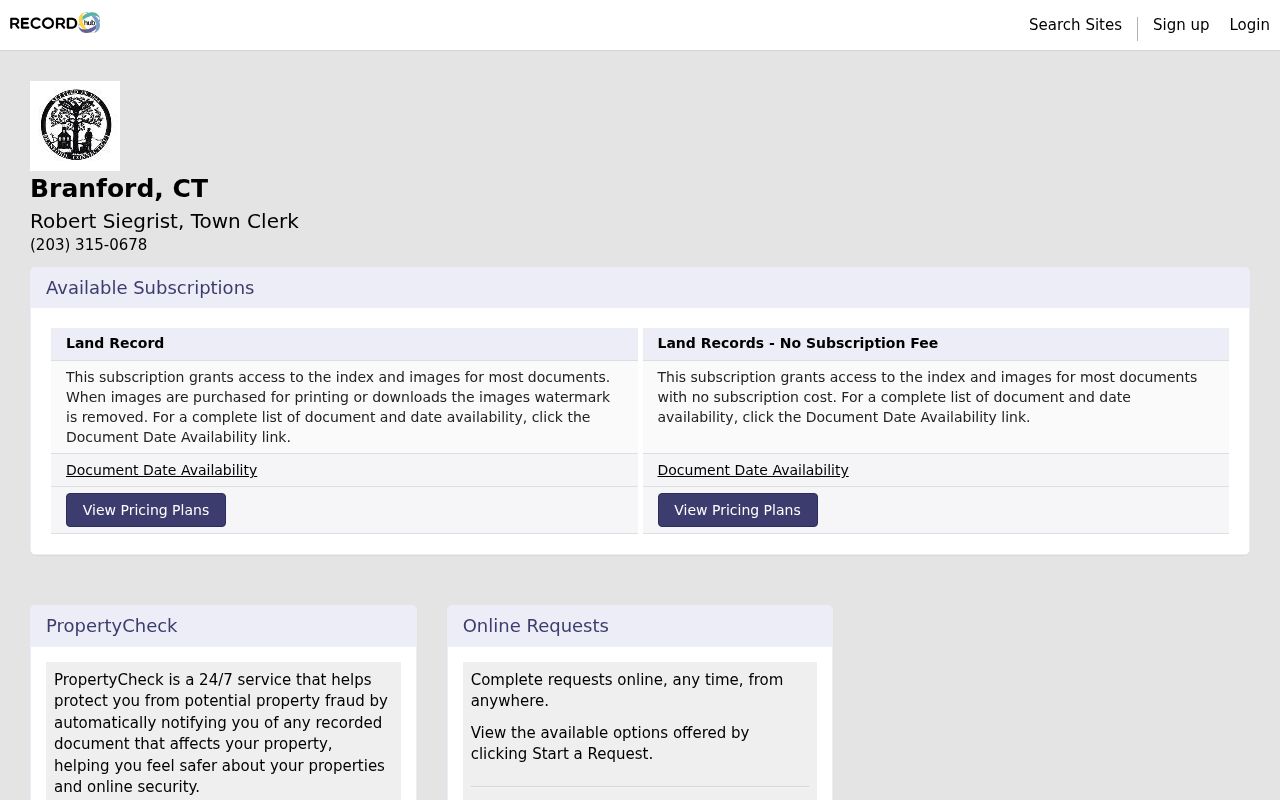
The Branford landing page distinguishes the software route from the underlying Town Clerk custody. That distinction matters when tracing previous residents through a Branford deed chain.
Branford Previous Residents in Deeds
A Branford deed chain is a sequence of recorded transfers, not a complete household list. Begin with the public Vision card for the Branford address. Save the PID, MBLU, account, location, owner label, mailing line, sale date, and Book/Page separately. The card is an assessment display and a bridge to the instrument. The legal description and recorded parties carry more weight when a street number, unit, or owner spelling changes.
Then work backward with the parties and legal description:
- Open the current Branford Book/Page in RecordHub if the image is available, or ask the Branford Town Clerk for the instrument and any referenced plan.
- Record the Branford grantee, grantor, party roles, document type, date, consideration when displayed, legal description, and map or survey reference.
- Search the prior Branford seller or grantor as an earlier grantee, preserving the exact entity or trust style rather than shortening it.
- Check lot, unit, MBLU, plan, and parcel-edit clues at every Branford step. A split or combination in GIS needs a deed or survey when the boundary matters.
- Stop at the Branford online date gap and move to the Town Clerk, library abstracts, FamilySearch, or a named public-record request for the earlier layer.
- Grantor and grantee
- The grantor transfers an interest. The grantee receives it. A party role is not the same as residence.
- Chain of title
- The linked sequence of recorded instruments used to follow an interest from one owner or party to an earlier one.
- Legal description
- The parcel or lot language in the instrument. It can remain useful when an address or street label changes.
- Criss-cross directory
- An address-oriented directory tool that points from a street or number to a dated name entry, usually for historical research.
Branford Previous Residents in 1909
The 1909 Branford directory is a strong local example of why dated evidence matters. Its summary reports 2,074 names and 1,822 total changes, with earlier comparison figures for additions, removals, and address changes. Those are production counts for the directory, not a census or population total. A previous-residents search should use the Branford volume for its entries and page images, not turn the summary into a count of Branford households.
The Branford scan contains resident names, home or boarding lines, status or occupation, localities, businesses, post offices, schools, churches, cemeteries, societies, fire material, and town officers. Exact abbreviations should be read from the volume’s own key. A boarding notation does not prove a full household, and a “removed” entry means removed from that edition, not necessarily deceased or permanently gone.
The digitized 1909 Branford directory is the source for the volume’s layout and dated evidence. Pair a line with the nearest earlier or later directory, a newspaper, census page, or land instrument before making a continuity claim.
The Branford scan shows why page, title, year, and image citation belong in a house-history note.
Branford Directory Years for Past Residents
Branford directories and census schedules do not measure the same moment or the same relationship. Branford’s directory run begins in 1895 and is not annual. The Branford library guide gives a street index from 1928, while the federal census sequence in the local collection runs from 1790 to 1940 with the 1890 gap. Treat each source as a dated snapshot and use the gaps as prompts for another source.
A practical household sequence is:
- Write the current Branford street, old spelling, village label, unit, and parcel key before opening a historical volume.
- Use the Branford directory or street index to find a name and address in the closest available year.
- Check the nearest Branford census year for household composition, then note the enumeration district or page instead of treating it as a continuous address record.
- Search the Branford newspaper archive, church or cemetery index, obituary, probate index, or land abstract for the interval between the two dated sources.
- Compare a later Branford directory and the legal parcel record before writing that someone remained at the address.
The Blackstone Branford local-history shelf is the fallback when a Branford volume, map, or scan is not online. Staff ask researchers to contact the reference desk before a specialized visit. Copies or scans may be possible when condition and permission allow, but many Branford materials remain in the building.
Branford Residents in House History
The library’s Branford Room connects several source types that are easy to miss in a simple name search. Its holdings include directories, newspapers, census material, yearbooks from 1925 to the present with 1933/34 missing, vital indexes, church histories, cemetery material, house and architectural surveys, maps, photographs, and family papers. The local-history resources page directs researchers to contact staff or make an appointment, and some library databases require in-building use.
The Blackstone local-history collection guide is a useful first request. Name the street or family, approximate years, variant spellings, desired source, and whether a scan or citation is needed. A focused request lets staff distinguish a newspaper lookup from a manuscript, real-estate card, directory, or architectural survey.
The Branford library collection links a current parcel question to dated local sources without pretending that one shelf is a complete resident register.
The Branford ancestor guide adds a local source ladder for Barbour abstracts, churches, cemeteries, land records, directories, and newspapers.
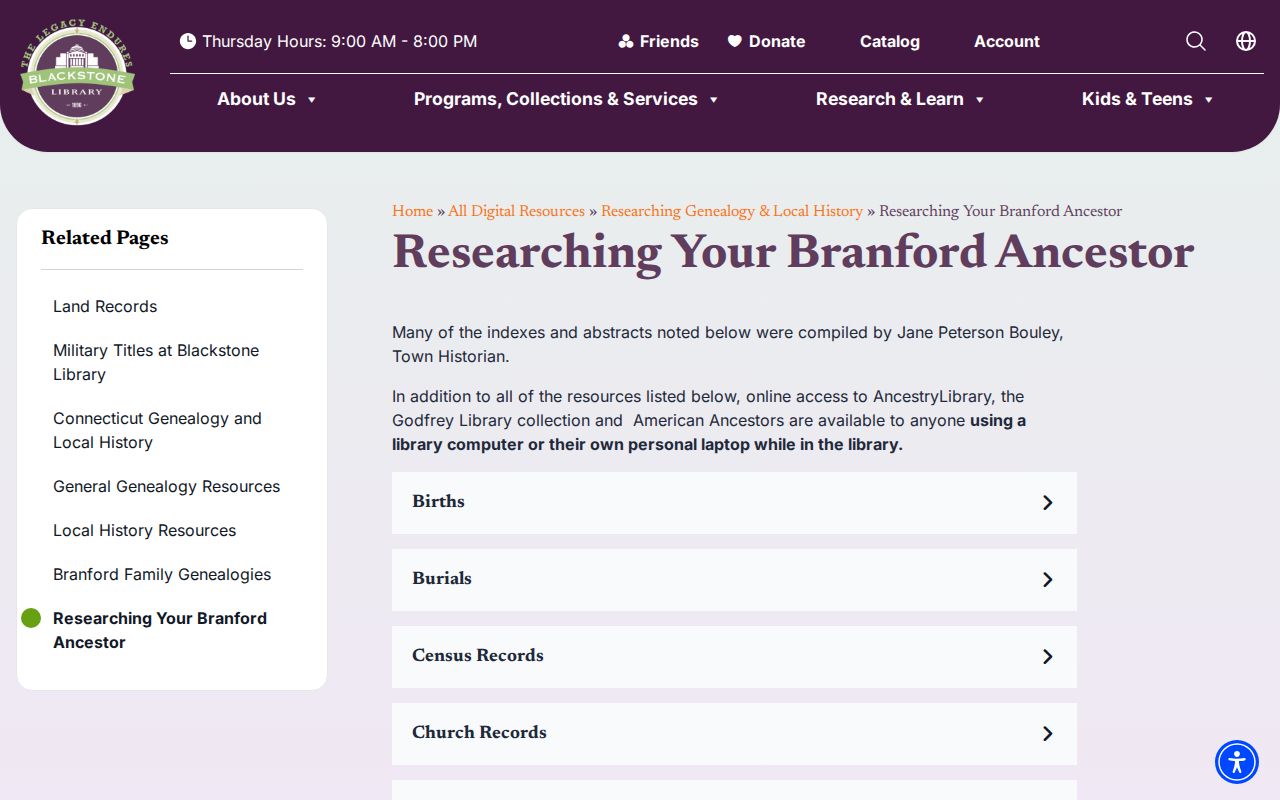
The Branford guide is a research aid, so each clue still needs its own title, date, page, and custodian.
When a Branford Directory Year Is Missing
Missing years and catalog differences are normal parts of the Branford trail. The directory guide lists a 1916 volume, while an archive description says 1917. The guide also warns that the set is not annual and that maps may be absent. A failed year search should lead to nearby editions, street landmarks, newspapers, church records, cemetery indexes, maps, and the Historical Society inventory. It should not be turned into a vacancy claim.
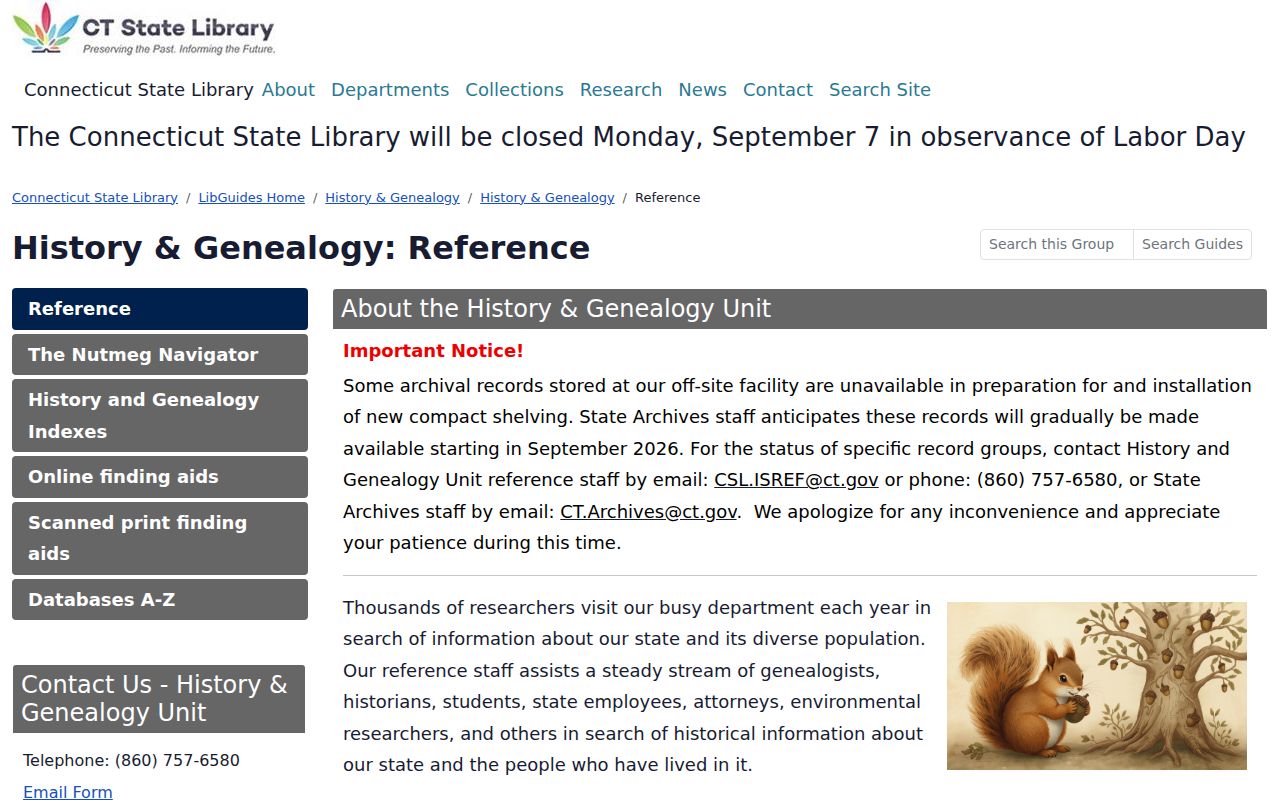
FamilySearch adds another route for early Connecticut wills, deeds, pre-1850 vital records, and cemetery material, with image access varying by account and location. The Connecticut State Library genealogy guide points to Branford town documents, probate, city directories, archives, and finding aids. Offsite Branford material may be released in stages from compact shelving, so a catalog record and a current access check both matter.
The Connecticut State Library genealogy guide provides the statewide shelf map for Branford research. Use its collection title and finding-aid details in a request rather than assuming that every index has a name-level search.
A Branford catalog gap is a reason to widen the source stack, not a reason to fill the missing Branford year with a guess.
Branford Past Residents in Probate
A past household trail often ends with an event rather than another address. Branford newspapers can carry a move, death notice, civic item, or place reference. Cemetery and church indexes can supply a date or family connection. The Branford-North Branford Probate Court, PD-35, offers a district, status, and last-name/first-name lookup, but its result coverage and document fields were not captured. The clerk remains the route for a file or access question.
Use a Branford obituary as dated evidence of a person and place, not as proof of continuous ownership. A probate index can suggest an estate role or heir lead, not establish a complete family relationship. A later deed may close the property side while a directory or newspaper closes the household side. Keep those endings in separate columns.
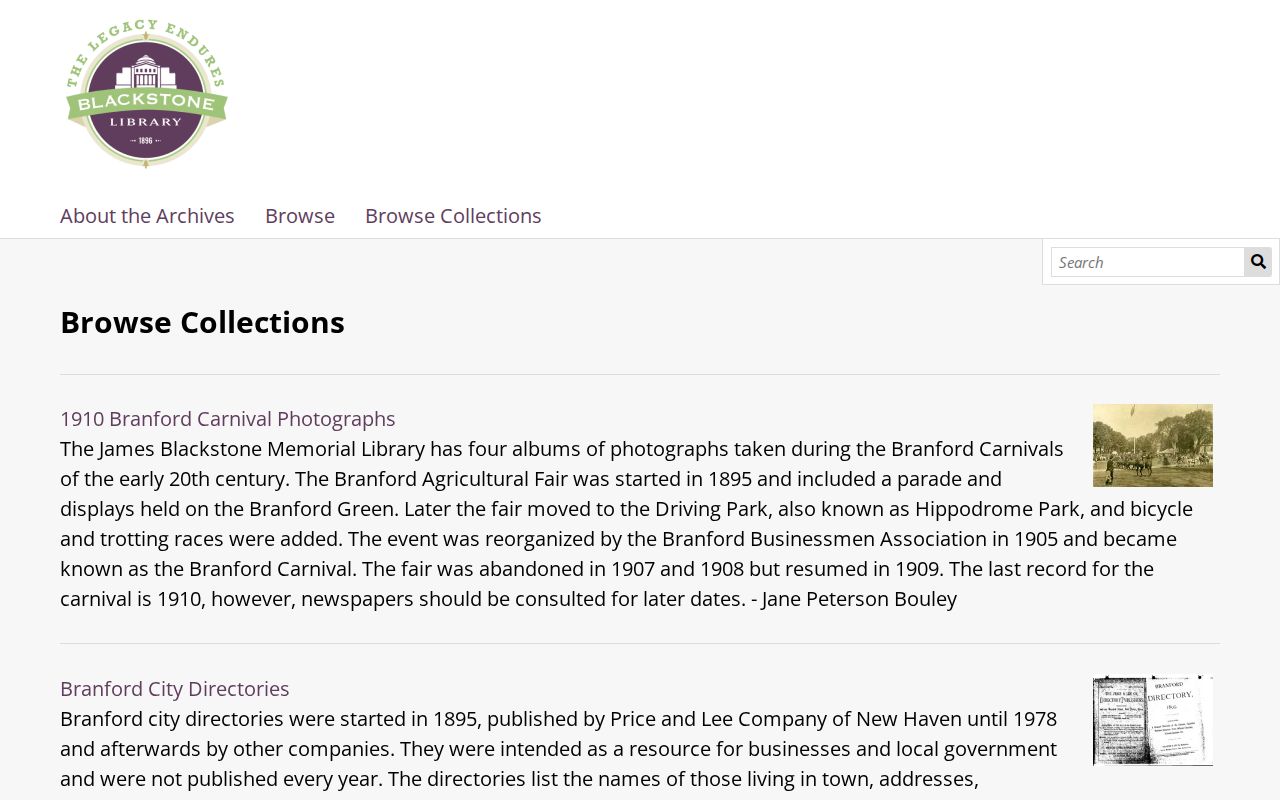
For a broader history, the Blackstone archive browse page can surface a directory or local-history item that is not indexed by a modern address. The image below represents a browse route, not a guarantee of a name match.
A final Branford research note should state the source that ends the trail, the dates covered, and what remains unverified.
Branford Previous Residents and Privacy
Branford previous-resident research is appropriate for family history, a known house, archival study, or a dated property question. It should not become a current-person roster. Distinguish owner of record, mailing recipient, directory entry, occupant, voter, court party, and heir. Keep current phone, email, birth-date detail, protected voter information, and safety-program addresses out of a public narrative.
Lawful use. A Branford house-history search should use the minimum information needed for a lawful personal purpose. Do not use a past address to track, harass, intimidate, or expose a living person.
Connecticut’s Safe at Home program and Branford voter privacy rules can hide or substitute an address. A Branford court record may be sealed or outside the online retention period. A vital record may have eligibility limits. If a source stops, report the boundary and move to the named Branford custodian rather than reconstructing the missing detail elsewhere.